

How to Switch a Cat From Dry Food to Wet Food
Short answer: Switch over 7 to 10 days, the range in the AAHA/AAFP guidelines. Start with about 25 percent wet food and 75 percent dry, move to half and half, then three-quarters wet, then all wet. Wet food holds more water, so swap by calories, not volume. Call your vet if your cat refuses to eat for 24 hours.
Cats can be creatures of habit, and a sudden change can leave a cat sniffing the bowl and walking away. A slow handover works better. Here is how to switch a cat from dry food to wet food, with a day-by-day plan you can follow.
How to switch a cat from dry food to wet food: a 7-day plan
PetMD, in an article by Brittany Kleszynski, DVM (published March 2026), lays out a seven-day schedule. Each day, mix the new wet food into the old dry food:
| Days | Dry food (old) | Wet food (new) |
|---|---|---|
| 1 to 2 | 75% | 25% |
| 3 to 4 | 50% | 50% |
| 5 to 6 | 25% | 75% |
| 7 and after | 0% | 100% |
Royal Canin suggests the same steps with 2 or 3 days at each one, which stretches the switch to about 6 to 9 days. If your cat seems unsure, take the longer path. The AAHA/AAFP guidelines allow a gradual transition to the new diet over 7 to 10 days.
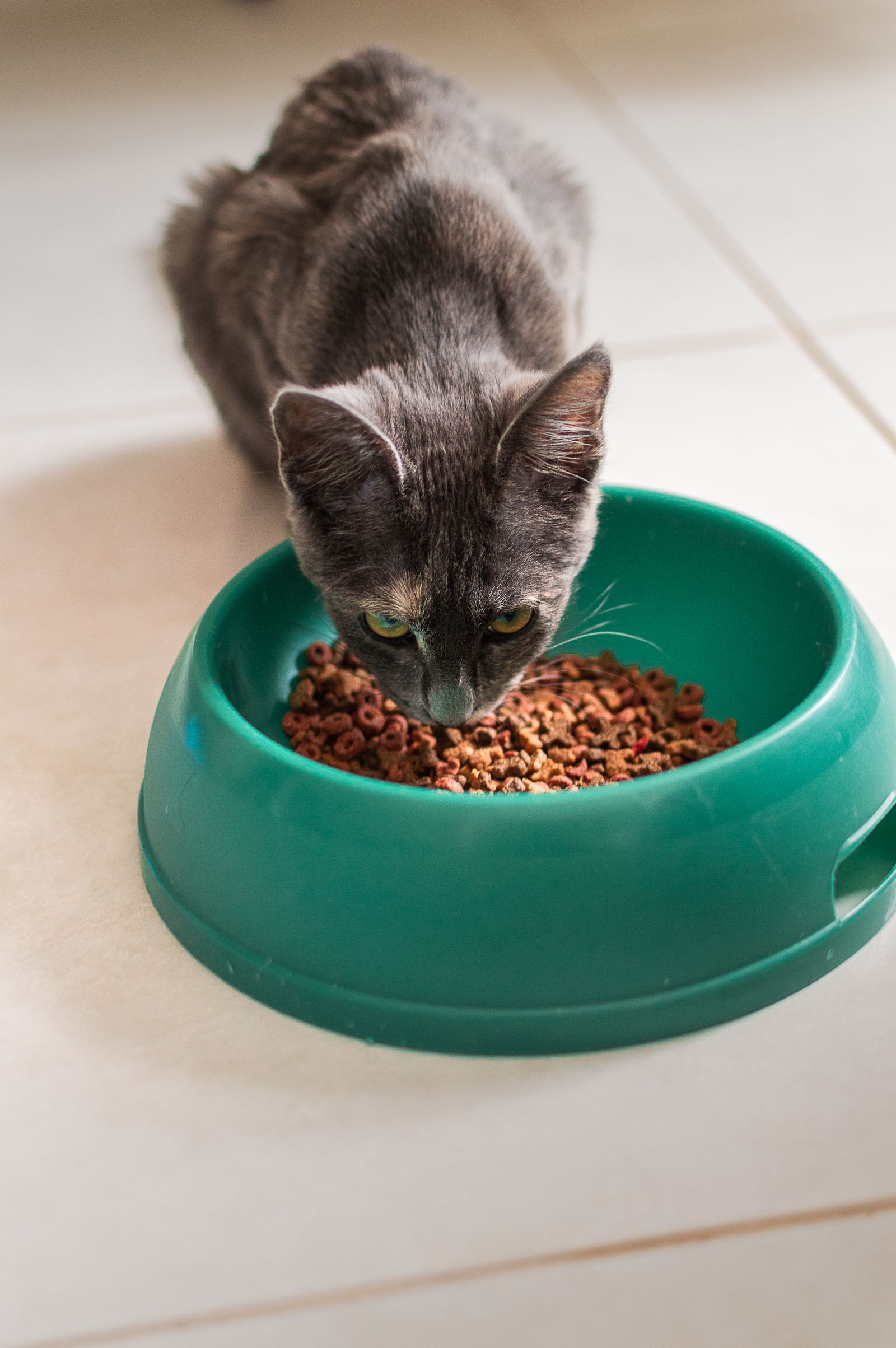
How much wet food replaces dry food?
Swap by calories, not by the scoop. PetMD notes that wet food is mostly water, so you need a larger volume of it to give the same calories your cat got from dry food. Cornell says canned cat food is at least 75 percent moisture.
Here is a worked example using numbers from two sources. The World Small Animal Veterinary Association (WSAVA) lists 240 to 270 calories a day for a 9.9-pound cat, so we will use about 250. PetMD's example canned food has about 181 calories per 5.5-ounce can.
- Days 1 to 2 (25% wet): about 62 calories from wet food, roughly one-third of that can. Cut the dry food by the same 62 calories.
- Days 5 to 6 (75% wet): about 188 calories from wet food, roughly one can.
- Day 7: all wet, the full 250 calories, about 1.4 cans.
Your food's label has its own calories, so redo the math with those numbers. Our guide on how much wet food to feed a cat per day has the full chart by weight. A Tufts veterinary nutritionist, Deborah Linder, DVM, recommends weighing food rather than using cups.
What if my cat won't eat wet food?
Cornell notes that some cats become very selective about what they will accept. If your cat refuses, do not push. Try these steps:
- Go back one step. Return to the last mix your cat ate happily, and hold there for a few days.
- Serve it at room temperature. Royal Canin says that if a pet does not like refrigerated food, you can bring it to room temperature by adding warm water.
- Offer small portions. Smaller servings mean less waste, and uneaten wet food should not sit out for long. See how long wet cat food can sit out.
- Keep fresh water out and keep the routine steady.

How long can a cat go without eating during the switch?
Not long. Cornell says anorexia can have a severe impact on a mature cat's health if it persists for as little as 24 hours, and that a cat that refuses to eat can develop serious medical problems. Do not wait for your cat to give in. If your cat has not eaten in 24 hours, call your vet.
Can I mix wet and dry cat food long term?
Yes, many households do. Mixing is also how the switch works. Count the calories from both foods toward one daily total, as the amount guide above explains. Our post on whether cats need wet food covers why many cat parents add it.
When should I call my vet?
PetMD says to call your veterinarian right away if your cat is persistently vomiting or has diarrhea, has not eaten in 24 hours, or seems unusually lethargic. Ask your vet before switching if your cat is a kitten or a senior, has a health condition, or is on a prescription diet. PetMD also says to consult your veterinarian before any switch, since the right diet depends on age, health and weight.
The bottom line
Take 7 to 10 days. Mix the wet food into the dry food in small steps, swap by calories, and slow down if your cat balks. If your cat stops eating, call your vet.
If you are still choosing a wet food, Haven Bowl is a US wet cat food brand with a kitten trial box so you can try four recipes before you commit to more. Starts from $19.99.
This post is for general information. It is not veterinary advice. If you have questions about your cat's diet or health, talk to your vet.
Frequently asked questions
How long does it take to switch a cat from dry food to wet food?
The AAHA/AAFP feline life stage guidelines describe a gradual switch over 7 to 10 days. PetMD's plan takes 7 days. If your cat has an upset stomach or hesitates, slow down and ask your vet.
Can I mix wet and dry cat food together?
Yes. Mixing the new food into the old is how the standard switch works. Many cat parents also keep both long term. Count the calories from both toward one daily total, and ask your vet what split suits your cat.
How much wet food replaces dry food?
Swap by calories, not by volume. PetMD notes wet food is mostly water, so you need more of it to match the calories of dry food. Check the calories on both labels, and weigh portions rather than scooping.
What if my cat refuses wet food?
Go back one step and move more slowly. Royal Canin suggests warming refrigerated food to room temperature with warm water. Cornell says a cat that refuses to eat can develop serious medical problems, so call your vet if it persists.
How long can a cat go without eating while switching food?
Not long. Cornell says anorexia can have a severe impact on a mature cat's health if it lasts as little as 24 hours. PetMD says to call your vet if your cat has not eaten in 24 hours. Do not wait it out.
Should I switch my cat's food without asking my vet?
Ask first if your cat has a health condition, is a kitten or a senior, or is on a prescription diet. PetMD says to always consult your veterinarian before switching, since the right diet depends on age, health and weight.
Sources
- AAHA/AAFP, 2021 Feline Life Stage Guidelines, "Nutrition and Weight Management": gradual transition to a new diet over 7 to 10 days. https://www.aaha.org/resources/2021-aaha-aafp-feline-life-stage-guidelines/nutrition-and-weight-management-2/
- PetMD, "How To Switch Cat Food" (Brittany Kleszynski, DVM, March 8, 2026): 7-day schedule; wet food is mostly water, so a larger volume is needed for the same calories; call a vet for persistent vomiting or diarrhea, 24 hours without eating, or lethargy. https://www.petmd.com/cat/nutrition/how-to-switch-cat-food
- Royal Canin US, "Frequently Asked Questions": 25/75, 50/50, 75/25 steps of 2 or 3 days; warm refrigerated food to room temperature with warm water. https://www.royalcanin.com/us/about-us/faqs
- Cornell Feline Health Center, "Feeding Your Cat": canned food is at least 75 percent moisture; some cats become very selective; a cat that refuses to eat can develop serious medical problems. https://www.vet.cornell.edu/departments-centers-and-institutes/cornell-feline-health-center/health-information/feline-health-topics/feeding-your-cat
- Cornell Feline Health Center, "Anorexia": anorexia can have a severe impact on a mature cat's health if it persists for as little as 24 hours. https://www.vet.cornell.edu/departments-centers-and-institutes/cornell-feline-health-center/health-information/feline-health-topics/anorexia
- WSAVA Global Nutrition Committee, "Calorie Needs for an Average Healthy Adult Cat in Ideal Body Condition" (July 2020): 240 to 270 calories a day for a 9.9-pound cat. https://wsava.org/wp-content/uploads/2020/07/Calorie-Needs-for-Healthy-Adult-Cats-updated-July-2020.pdf
- PetMD, "How Much To Feed a Cat" (Barri J. Morrison, DVM): about 181 calories per 5.5-ounce can of canned chicken food. https://www.petmd.com/cat/nutrition/how-much-to-feed-a-cat
- Tufts Petfoodology, Deborah E. Linder, DVM, MS, DACVIM (Nutrition), "Should You Be Weighing Your Pet's Food?": weigh food instead of measuring by volume. https://sites.tufts.edu/petfoodology/2021/08/16/should-you-be-weighing-your-pets-food/
Photos: Pitipat Usanakornkul and Eduardo López on Pexels (free licence).
